
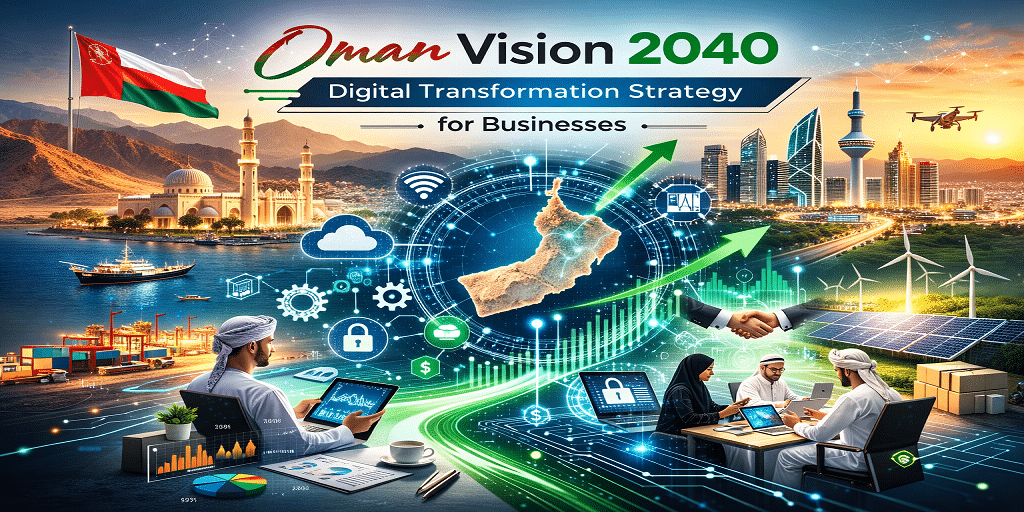
Why Vision 2040 Matters for Businesses
Oman Vision 2040 represents a long-term national strategy designed to transform the Sultanate into a diversified, sustainable, and knowledge-based economy. While often discussed at a policy level, its most significant impact will be felt within the private sector.
At its core, Vision 2040 prioritizes digital transformation as a key enabler of economic growth. The shift from an oil-dependent model to a knowledge-driven economy requires businesses to rethink how they operate, compete, and scale.
For Omani enterprises, this is not a theoretical transition. It is a practical mandate. Technology adoption is no longer a competitive advantage reserved for market leaders — it is a requirement for survival.
Organizations that proactively modernize their systems, digitize their operations, and strengthen their IT infrastructure will be better positioned to:
- Improve operational efficiency
- Enhance customer experiences
- Reduce risk exposure
- Expand into new markets
- Compete regionally and globally
Vision 2040 creates opportunity. Technology enables businesses to capture it.
The Digital Transformation Pillar of Vision 2040
The digital transformation pillar within Vision 2040 provides a structural framework for how Oman's economy will modernize. For businesses, this pillar translates into measurable operational upgrades, strategic technology investments, and long-term digital capability building rather than short-term system replacements.
Smart Economy
A smart economy integrates automation, artificial intelligence, real-time analytics, and digital platforms into everyday business operations. For Omani companies, this means improving productivity through connected systems, reducing operational inefficiencies, and enabling data-driven decisions that enhance profitability while supporting national goals of sustainable, technology-enabled economic diversification.
Innovation & Entrepreneurship
Vision 2040 promotes innovation as a catalyst for private sector growth. Businesses are encouraged to adopt emerging technologies, modernize service delivery, and create scalable digital models. Technology adoption empowers startups and enterprises alike to experiment, optimize processes, and compete regionally through digitally enhanced products, services, and operational frameworks.
Private Sector Empowerment
The private sector plays a leading role in economic expansion under Vision 2040. Empowerment comes through digital enablement — enabling companies to operate efficiently, reduce dependency on manual systems, and scale operations confidently. Structured IT frameworks allow organizations to innovate faster while maintaining operational control and financial visibility.
Technology-Driven Efficiency
Technology-driven efficiency refers to replacing repetitive, error-prone processes with automated workflows and integrated platforms. ERP systems, cloud tools, digital payment systems, and analytics dashboards streamline operations across departments. For businesses in Oman, efficiency directly impacts competitiveness, cost optimization, and long-term sustainability in increasingly digital markets.
Digital Infrastructure Development
National digital infrastructure is expanding rapidly, including broadband connectivity, secure data systems, and e-government platforms. Businesses must align internal systems to integrate seamlessly within this ecosystem. Modern IT architecture ensures compatibility, scalability, and compliance, positioning companies to leverage Oman's growing digital environment effectively and securely.
For companies seeking reliable and scalable IT Solutions in Oman, alignment with Vision 2040 requires a strategic, long-term approach rather than fragmented technology investments.
Why Omani Businesses Must Align Their Technology Strategy
The competitive landscape in Oman is changing rapidly.
Increasing Competition
As market barriers decrease and foreign investment increases, businesses face heightened competition. Companies that rely on manual processes or outdated systems will struggle to compete with digitally agile competitors.
Rising Customer Expectations
Today's customers expect:
- Online accessibility
- Instant transactions
- Seamless service
- Personalized experiences
Digital maturity directly impacts customer satisfaction.
Data-Driven Decision Making
Data is now a strategic asset. Businesses must collect, analyze, and act on real-time data to make informed decisions regarding pricing, inventory, marketing, and expansion.
Automation & Operational Efficiency
Automation reduces errors, increases speed, and lowers operational costs. From retail billing to hotel reservations, efficiency directly influences profitability.
Cyber Risk Exposure
Digital growth increases exposure to cyber threats. Businesses must implement structured risk management frameworks to safeguard data and ensure continuity.
Technology strategy is no longer an IT department concern — it is a boardroom priority.
Core Business Technology Areas Supporting Vision 2040
Smart Retail & Digital Commerce
Retail transformation is one of the most visible indicators of digital adoption.
Modern retail businesses in Oman are implementing:
- Advanced POS systems
- Digital payment integration
- Real-time inventory tracking
- Centralized accounting systems
- Omnichannel commerce platforms
Automated retail ecosystems improve:
- Billing accuracy
- Inventory visibility
- Supplier management
- Customer engagement
Solutions such as retail management software oman enable businesses to centralize operations across multiple branches while maintaining financial transparency.
Retailers embracing smart technology are not just improving efficiency — they are creating scalable growth models aligned with Vision 2040's smart economy goals.
Hospitality Technology & Tourism Growth
Tourism is a strategic growth sector under Vision 2040. As Oman strengthens its global tourism positioning, hospitality businesses must elevate operational standards.
Modern hospitality technology includes:
- Integrated property management systems
- Automated booking engines
- Channel management tools
- Revenue optimization systems
- Guest relationship management platforms
Implementing hotel management software in Oman enables hotels and resorts to streamline front desk operations, housekeeping coordination, billing processes, and performance reporting.
Technology empowers hospitality businesses to:
- Increase occupancy rates
- Optimize pricing strategies
- Reduce manual errors
- Enhance guest experiences
In a tourism-driven growth strategy, hospitality digitization becomes a direct contributor to national economic expansion.
Cybersecurity & Data Protection as Business Foundations
As businesses digitize operations, the attack surface expands.
Digital transformation without cybersecurity is a structural risk.
Organizations must implement:
- Risk assessment frameworks
- Access control policies
- Data encryption standards
- Regulatory compliance measures
- Incident response planning
Customer trust depends on secure systems. Data breaches damage reputation, disrupt operations, and create financial liabilities.
Cybersecurity must be integrated into every layer of digital growth — from retail systems to cloud infrastructure.
Secure foundations enable confident expansion.
Cloud Infrastructure & Managed IT Services
Cloud adoption is central to modernization.
Businesses in Oman are transitioning from on-premise infrastructure to cloud-based environments to achieve:
- Scalability
- Remote workforce enablement
- Reduced capital expenditure
- Centralized data management
- Improved disaster recovery
Cloud-driven environments also allow organizations to integrate AI tools, analytics platforms, and automation engines seamlessly.
Many companies complement cloud adoption with structured IT outsourcing services in Oman to ensure continuous monitoring, maintenance, and optimization of their digital infrastructure.
Managed IT frameworks reduce operational strain while improving system performance and security.
Workforce Modernization & IT Talent Strategy
Digital transformation is not just about technology — it is about people.
A significant challenge in Oman's transformation journey is the digital skills gap. Businesses often struggle to recruit, train, and retain specialized IT talent.
Workforce modernization strategies include:
- Upskilling internal teams
- Building remote IT capabilities
- Leveraging flexible outsourcing models
- Implementing structured training programs
Strategic adoption of Offshore staffing solutions in Oman enables businesses to access specialized expertise without long-term hiring constraints.
Flexible talent models support scalability, innovation, and cost efficiency — all essential components of Vision 2040's private sector empowerment goals.
Common Digital Transformation Challenges in Oman
While opportunities are significant, digital transformation presents practical challenges that businesses must address strategically rather than reactively.
Legacy Systems
Many organizations still rely on outdated infrastructure and disconnected software systems. These legacy environments limit scalability, hinder integration, and create operational inefficiencies. Migrating to modern platforms requires structured planning to avoid business disruption while ensuring seamless data transfer, system compatibility, and operational continuity.
Budget Constraints
Digital transformation requires capital investment, and many businesses hesitate due to cost concerns. However, delaying modernization often results in higher long-term operational expenses. Strategic planning, phased implementation, and scalable cloud solutions can help organizations manage budgets effectively while achieving measurable return on investment.
Limited Internal Expertise
A shortage of specialized IT talent can slow transformation initiatives. Businesses may struggle with system integration, cybersecurity implementation, and infrastructure optimization. Without adequate technical expertise, digital projects risk delays or underperformance, making external support models and structured training programs increasingly valuable.
Integration Complexity
Disconnected systems across finance, operations, sales, and inventory create information silos. Integration challenges can delay reporting accuracy and hinder strategic decision-making. Businesses must adopt interoperable platforms that communicate seamlessly, enabling centralized data management and eliminating redundant workflows across departments.
Security Concerns
As digital systems expand, so does exposure to cyber threats. Many organizations hesitate to migrate to cloud platforms due to perceived security risks. Implementing structured cybersecurity frameworks, regular vulnerability assessments, and clear data governance policies mitigates risks while strengthening customer trust and regulatory compliance.
Recognizing these challenges is the first step toward building resilient solutions.
Building a Technology Roadmap Aligned with Vision 2040
A structured roadmap ensures digital transformation supports long-term business strategy rather than isolated technology upgrades.
Step 1: Assess Current Systems
Conduct a comprehensive evaluation of infrastructure, software platforms, workflows, cybersecurity posture, and operational bottlenecks to determine overall digital maturity and identify foundational gaps requiring immediate attention.
Step 2: Identify Digital Gaps
Analyze inefficiencies, automation opportunities, integration weaknesses, and scalability limitations to create a prioritized list of transformation initiatives aligned with both business objectives and Vision 2040 requirements.
Step 3: Prioritize Scalable Solutions
Select integrated, cloud-ready platforms that support long-term growth, enable automation, reduce manual intervention, and provide measurable performance insights across departments.
Step 4: Implement Cybersecurity Frameworks
Embed security protocols into infrastructure upgrades, implement access controls, ensure compliance standards, and establish proactive monitoring systems to protect business continuity.
Step 5: Continuous Monitoring & Optimization
Digital transformation requires ongoing evaluation, performance measurement, system updates, and strategic refinement to maintain competitiveness and operational resilience.
Businesses that adopt structured roadmaps position themselves as long-term contributors to Oman's economic diversification.
Conclusion: Future-Proofing Business Growth in Oman
Oman Vision 2040 presents a strategic opportunity for businesses willing to modernize with purpose. Digital transformation is not merely a technical upgrade; it is a business growth accelerator.
Organizations that invest in structured IT strategies, scalable infrastructure, and secure digital frameworks will lead their industries as Oman transitions into a diversified, knowledge-based economy.
Early adopters will not just adapt to change; they will shape the future of business in Oman.
Businesses that align their digital strategy with Vision 2040 will not only support national growth, but they will also define the next generation of market leaders in Oman.
Align Your Business with Oman Vision 2040
Build scalable, secure, and future-ready technology systems designed to support long-term growth. Start your digital transformation journey today.
Frequently Asked Questions
1. What is the role of digital transformation in Oman Vision 2040?
Digital transformation is a central enabler of Oman Vision 2040, supporting economic diversification and private sector growth. It empowers businesses to adopt automation, cloud infrastructure, data analytics, and secure IT systems, helping them improve operational efficiency, competitiveness, and long-term sustainability in a knowledge-based economy.
2. Why should Omani businesses align with Vision 2040?
Aligning with Vision 2040 allows businesses to remain competitive in an evolving economic landscape. Companies that modernize their technology infrastructure can enhance productivity, improve customer experiences, reduce operational risks, and position themselves for sustainable growth as Oman transitions toward a digitally driven economy.
3. How does digital transformation improve business competitiveness?
Digital transformation enhances competitiveness by automating workflows, improving decision-making through data analytics, and streamlining customer engagement. Integrated systems reduce operational inefficiencies and enable faster response to market changes, allowing businesses to adapt quickly and outperform competitors relying on manual or outdated processes.
4. What industries in Oman benefit most from digital transformation?
Industries such as retail, hospitality, healthcare, education, logistics, and financial services benefit significantly from digital transformation. Modern POS systems, hotel management platforms, cloud infrastructure, and cybersecurity frameworks help businesses in these sectors scale operations, improve customer satisfaction, and maintain regulatory compliance.
5. What are the biggest digital transformation challenges in Oman?
Common challenges include legacy systems, limited IT expertise, budget constraints, integration complexities, and cybersecurity concerns. Overcoming these obstacles requires structured planning, phased implementation strategies, and collaboration with experienced technology partners who understand Oman's evolving digital environment.
6. How important is cybersecurity in Vision 2040's digital strategy?
Cybersecurity is foundational to sustainable digital growth. As businesses adopt cloud platforms and automation systems, exposure to cyber threats increases. Implementing structured risk management, data protection policies, and compliance frameworks ensures business continuity, protects customer trust, and supports secure participation in Oman's digital economy.
7. How can businesses start their digital transformation journey in Oman?
Businesses should begin by assessing current systems, identifying digital gaps, prioritizing scalable solutions, and implementing cybersecurity frameworks. A structured roadmap aligned with Vision 2040 ensures investments deliver measurable results while enabling long-term growth, operational resilience, and competitive advantage in Oman's evolving marketplace.