
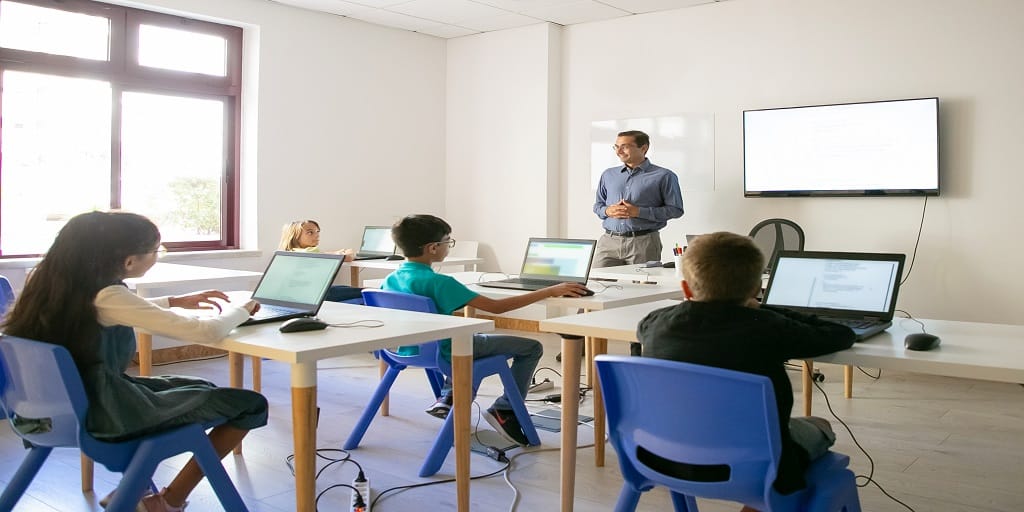
The Shift Toward Smart Education in Oman
Education in Oman is undergoing a significant transformation. As digital adoption accelerates across industries, classrooms are no longer limited to traditional teaching tools. Schools are increasingly integrating technology to create interactive, data-driven, and student-centered learning environments.
A smart classroom is not simply a room with a screen. It is a connected ecosystem where interactive displays, digital content platforms, real-time assessments, and immersive technologies work together to enhance learning outcomes.
With Oman's national vision emphasizing innovation, knowledge development, and digital readiness, educational institutions are rethinking how technology can improve teaching effectiveness and student engagement. The shift is no longer optional — it is becoming a strategic priority for private schools, international institutions, and higher education providers across the country.
Smart classrooms represent the future of education in Oman — where learning is interactive, collaborative, measurable, and future-focused.
What Defines a Smart Classroom?
A smart classroom is built around integration, not individual devices. It combines hardware, software, and connectivity to create a seamless learning experience.
🔹 Interactive Digital Boards
Modern interactive displays allow teachers to present multimedia content, annotate lessons in real time, and engage students through touch-enabled collaboration. Solutions such as the SMART Board MX Series, RX Series, GX Series, and 6000S Series transform traditional whiteboards into dynamic digital teaching hubs.
Unlike static projection systems, interactive boards allow students to participate directly in lessons — improving attention, comprehension, and retention.
🔹 Education Software & Content Platforms
Hardware alone does not create a smart classroom. Software platforms such as SMART Notebook enable teachers to design interactive lessons, integrate multimedia, and conduct live assessments.
These tools allow educators to move beyond one-way instruction toward collaborative and adaptive teaching models.
🔹 Immersive Learning Technologies
Virtual and augmented reality are redefining classroom engagement. With platforms like ClassVR, students can explore historical landmarks, conduct virtual science experiments, and experience complex concepts in immersive 3D environments.
This experiential learning approach increases retention and stimulates curiosity — especially in STEM subjects.
🔹 Cloud Connectivity & Collaboration
Cloud-based tools allow content sharing, assignment tracking, and real-time collaboration between students and teachers. Learning continues beyond the physical classroom, supporting hybrid and blended learning environments.
Together, these components define what truly makes a classroom "smart" — integration, interactivity, and insight.
Why Smart Classrooms Matter for Oman's Education Future
The modernization of education is closely tied to Oman's long-term development goals. As the country moves toward a knowledge-based economy, digital literacy and critical thinking skills are becoming essential. As highlighted in Oman's broader digital transformation strategy under Vision 2040, technology-driven education plays a central role in building a knowledge-based economy and preparing future-ready talent.
Smart classrooms contribute to this transformation in several ways:
🔹 Enhancing Student Engagement
Interactive and immersive tools capture student attention more effectively than traditional methods. Increased engagement leads to better comprehension, stronger academic performance, and improved classroom participation.
🔹 Supporting Digital Skill Development
Students exposed to technology-rich environments develop digital confidence early. This prepares them for higher education and future careers in technology-driven industries.
🔹 Improving Teaching Efficiency
Teachers gain access to ready-made lesson templates, digital resources, and automated assessment tools. This reduces preparation time and allows educators to focus more on student interaction.
🔹 Strengthening School Competitiveness
Private and international schools in Oman increasingly compete on innovation and quality. Smart classrooms enhance institutional reputation, attract admissions, and demonstrate commitment to future-ready education.
Smart classrooms are not just a technological upgrade — they are a strategic investment in educational excellence.
Core Technologies Powering Smart Classrooms in Oman
Smart classrooms function as connected ecosystems. The real impact comes from how technologies integrate, not from isolated devices.
🔹 Interactive Displays & Touch Panels
Interactive digital boards serve as the visual and collaborative center of the classroom. Modern SMART interactive displays allow teachers to:
- Present multimedia lessons
- Annotate content in real time
- Save and share session notes instantly
- Enable student participation directly on the board
Unlike traditional projectors, these systems offer touch responsiveness, split-screen functionality, and seamless device connectivity. When integrated with structured lesson software, they transform passive lectures into interactive experiences.
Importantly, these boards should be viewed as part of a broader smart classroom strategy rather than standalone upgrades.
Schools evaluating different interactive display options can explore our detailed guide on choosing the right smart board for your school in Oman to understand key features, classroom suitability, and long-term considerations.
🔹 Immersive Learning with Virtual Reality
Immersive tools such as ClassVR introduce experiential learning into the classroom. Instead of reading about historical landmarks or scientific phenomena, students can virtually explore them.
Applications include:
- Virtual field trips
- Interactive science simulations
- 3D anatomy exploration
- Cultural and historical immersion
This approach significantly improves concept retention and encourages active learning — particularly in STEM and humanities subjects.
🔹 Smart Lesson Design & Assessment Tools
Digital lesson platforms allow teachers to design structured, interactive sessions with built-in quizzes and feedback tools.
Features typically include:
- Real-time polls and assessments
- Instant performance analytics
- Collaborative whiteboarding
- Screen sharing between the teacher and students
Data generated during lessons enables educators to identify learning gaps immediately, allowing for faster intervention and personalized instruction.
🔹 Cloud-Based Content & Hybrid Learning
Smart classrooms extend beyond physical walls. Cloud connectivity enables:
- Remote access to learning materials
- Assignment submissions online
- Hybrid classroom participation
- Centralized content management
This flexibility ensures educational continuity and supports blended learning models increasingly adopted across Oman.
When these technologies operate together, classrooms become measurable, interactive, and scalable.
Benefits of Smart Classrooms for Schools, Teachers & Students
Smart classrooms create value at multiple levels — operational, academic, and strategic.
🔹 For School Management
- Enhanced institutional reputation
- Stronger parent confidence
- Improved enrollment competitiveness
- Data-driven academic performance tracking
- Scalable infrastructure for future growth
Investing in smart classrooms signals a commitment to innovation and long-term educational excellence.
🔹 For Teachers
- Reduced manual preparation time
- Access to multimedia teaching resources
- Real-time performance analytics
- Improved classroom control and engagement
- Easier collaboration with colleagues
Technology supports educators rather than replacing them, allowing teachers to focus on mentoring and instructional quality.
🔹 For Students
- Higher engagement levels
- Improved knowledge retention
- Development of digital literacy skills
- Interactive participation
- Exposure to future-ready technologies
Students become active participants rather than passive listeners — a shift that directly impacts learning outcomes.
Common Challenges in Implementing Smart Classrooms in Oman
Despite the advantages, implementation requires planning. Many institutions face practical challenges.
🔹 Budget Allocation
Upgrading classrooms requires upfront investment. However, phased implementation strategies can reduce financial strain while ensuring long-term scalability.
🔹 Infrastructure Readiness
Reliable internet connectivity, power supply stability, and proper classroom layout planning are essential for successful deployment.
🔹 Teacher Training
Even advanced technology fails without proper training. Schools must invest in professional development programs to ensure educators confidently use digital tools.
🔹 Integration Complexity
Technology should integrate seamlessly with existing systems. Disconnected tools create inefficiencies instead of improvements.
Addressing these challenges with a structured strategy ensures sustainable digital transformation rather than short-term experimentation.
Building a Smart Classroom Strategy in Oman
Successful smart classroom implementation is not about purchasing equipment — it requires structured planning aligned with educational goals.
Here's a practical roadmap schools in Oman can follow:
Step 1: Assess Existing Infrastructure
Evaluate current classroom setups, internet capacity, hardware availability, and teacher readiness. Identify gaps in connectivity, display systems, and software integration before making investment decisions.
Step 2: Define Learning Objectives
Technology must support academic outcomes. Schools should determine whether their priority is improving STEM engagement, increasing digital literacy, enhancing collaboration, or enabling hybrid learning.
Clear objectives prevent unnecessary spending on underutilized tools.
Step 3: Choose Scalable, Integrated Solutions
Select interactive displays, immersive tools, and software platforms that integrate seamlessly. Systems should allow future expansion without requiring complete replacement.
Scalability ensures long-term ROI.
Step 4: Invest in Teacher Training
Educator confidence directly influences classroom success. Ongoing training ensures teachers fully leverage interactive boards, lesson software, and immersive tools rather than using them as basic display screens.
Technology adoption must be supported by skill development.
Step 5: Monitor, Measure, and Optimize
Use performance analytics and feedback tools to track student engagement and academic outcomes. Regular evaluation allows schools to refine their approach and maximize the impact of their digital investments.
Smart classrooms should evolve continuously — just like education itself.
The Future of Education Technology in Oman
Education technology in Oman is still in a growth phase, but the trajectory is clear.
In the coming years, we can expect:
🔹 AI-Driven Personalization
Learning platforms will adapt content based on individual student performance, enabling customized lesson pacing and targeted interventions.
🔹 Predictive Learning Analytics
Data collected through smart systems will help schools identify performance trends and proactively support struggling students.
🔹 Fully Connected Digital Campuses
Classrooms, administrative systems, and communication platforms will operate within unified digital ecosystems.
🔹 Immersive & Experiential Learning Expansion
Virtual labs, simulations, and interactive global collaborations will become more common across subjects.
The schools that invest early in smart classroom strategies will be better positioned to lead in educational innovation and institutional growth.
Conclusion: Smart Classrooms as a Strategic Investment
Smart classrooms in Oman are not a passing trend — they represent the future of education delivery.
By integrating interactive displays, immersive technologies, cloud platforms, and data-driven tools, schools can:
- Improve student engagement
- Strengthen academic performance
- Enhance institutional reputation
- Prepare learners for a digital economy
The transformation of education requires more than devices. It requires vision, planning, and strategic implementation.
Schools that approach smart classrooms as long-term investments — rather than one-time purchases — will create lasting educational impact.
📢 Build Your Smart Classroom Strategy Today
Ready to transform your classrooms into future-ready learning environments?
Contact our education technology experts to assess your current infrastructure and design a smart classroom solution tailored to your institution's goals.
Frequently Asked Questions
1. What is a smart classroom?
A smart classroom is a technology-enabled learning environment that integrates interactive displays, digital content platforms, cloud connectivity, and real-time assessment tools. It enhances student engagement, supports collaborative learning, and enables data-driven teaching methods that improve academic performance and digital literacy development.
2. How do smart classrooms improve student engagement?
Smart classrooms use interactive boards, multimedia lessons, and immersive tools like virtual reality to create dynamic learning experiences. Students participate actively instead of passively listening, which increases attention, improves concept retention, and encourages critical thinking and collaboration across subjects.
3. Why are smart classrooms important for schools in Oman?
Smart classrooms align with Oman's vision for digital transformation and knowledge-based growth. They help schools enhance academic outcomes, strengthen competitiveness, improve institutional reputation, and prepare students with the digital skills required for higher education and future careers.
4. What technologies are required to build a smart classroom?
A smart classroom typically includes interactive digital boards, lesson design software, cloud-based learning platforms, secure connectivity, and immersive tools such as virtual or augmented reality systems. Proper integration and teacher training are essential to ensure these technologies deliver measurable educational impact.
5. Are smart classrooms expensive to implement?
While smart classroom upgrades require initial investment, phased implementation strategies can make the transition manageable. Over time, schools benefit from improved efficiency, stronger student outcomes, and enhanced enrollment competitiveness, making it a long-term strategic investment rather than a short-term expense.
6. How can schools successfully implement smart classroom solutions?
Schools should assess existing infrastructure, define clear learning objectives, choose scalable technologies, invest in teacher training, and continuously monitor performance outcomes. A structured strategy ensures technology supports educational goals rather than becoming underutilized equipment.